

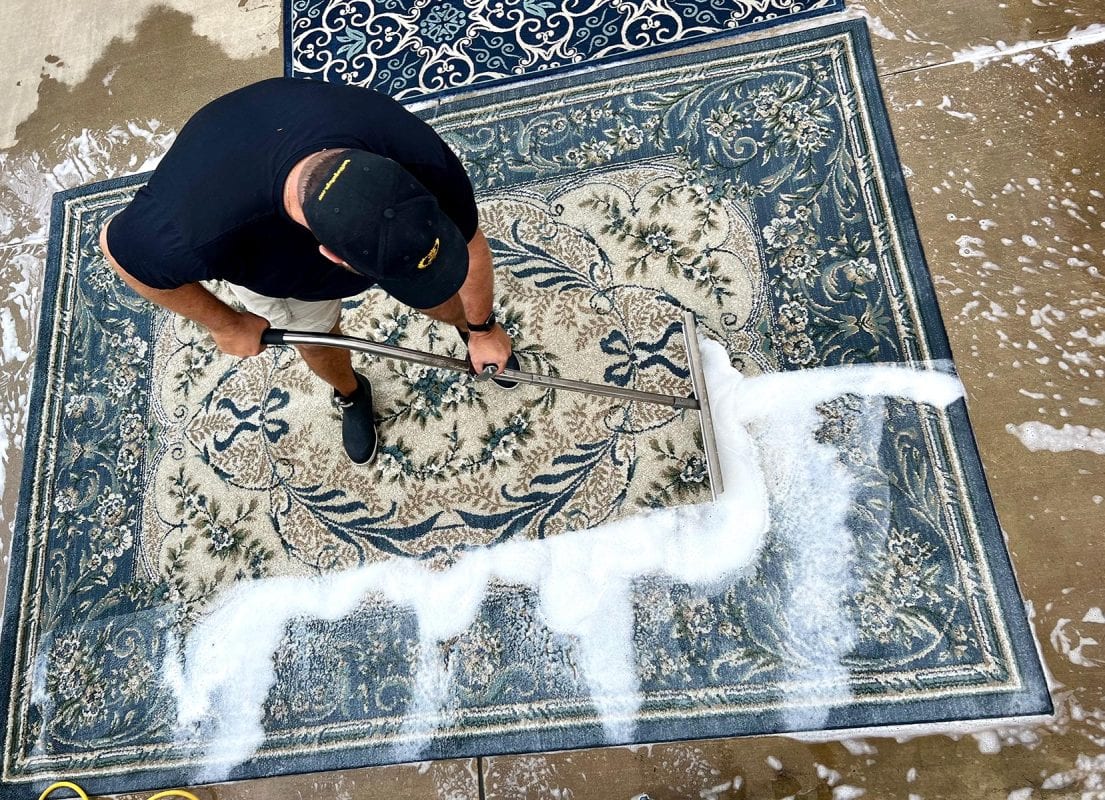
A rug that sees daily foot traffic should be professionally washed every 12 to 18 months. A rug in a quiet room can go about 2 years. Pet accidents, lingering odors, or dull colors mean it needs a wash now, no matter the calendar. Here is how we set that schedule for San Diego homes.
The Short Answer, With the Caveats
Our family has washed rugs in San Diego since 1956, and the 12 to 18 month guideline has held up for three generations. It fits living rooms, hallways, entries, and rugs under dining tables. Those rugs catch the most shoes, crumbs, and tracked-in grit.
Bedroom rugs and formal sitting rooms collect soil more slowly, so a 2 year cycle usually keeps them healthy. The honest caveat is that every home is different. A house with two kids and a dog loads a rug far faster than a quiet condo, and the schedule should tighten to match.
Why Waiting Until It Looks Dirty Costs You
Most people clean a rug when it looks dirty. By then the rug has been holding soil, dust, allergens, and bacteria deep in its foundation for a long time. A rug works like the biggest air filter in your home, and a full filter stops protecting you.
Oriental and Persian rugs are dense by design. That density is what makes them beautiful and durable, and it is also what lets them hide dry grit down at the knot line where no vacuum reaches. A hand-knotted rug can hold pounds of that grit, and it cuts against the foundation every time someone walks across the pile.
Regular washing removes the grit before it can grind the fibers down. That is the real payoff of a schedule. The rug stays bright, the dyes stay protected, and the piece lasts years longer than a neglected one.
The Schedule Changes by Fiber
The material of your rug matters as much as the traffic on it. We identify the fiber before any water touches a rug, and the fiber also shapes how often it should come in.
Wool
Most traditional Persian and oriental rugs are wool, and wool is the most forgiving fiber we clean. Its natural lanolin gives it resilience and some soil resistance, so a 12 to 18 month cycle in busy rooms works well. The condition is that it gets washed correctly, by hand with natural soap and a thorough rinse. In-home steam cleaning can mat wool fibers permanently, which is why wool belongs in a wash facility.
Silk
Silk fibers are very fine and their dyes are delicate, so silk suffers more from accumulated soil than wool does. If you own a silk rug, do not stretch past 2 years regardless of traffic. Silk also demands a gentler process, with low-pH solutions and no heat or high water pressure, so choose a cleaner who washes silk by hand.
Viscose and Bamboo Silk
Viscose and bamboo silk show up in many custom designer rugs, and they are among the most fragile fibers we handle. Both are cellulose, so they can brown, stiffen, or distort if moisture is handled carelessly. Keep these rugs on a regular schedule with a specialist, because a light routine wash under controlled moisture is far safer than a heavy rescue cleaning after years of buildup.
Synthetic and Machine-Made
Polypropylene, nylon, and polyester rugs are more durable, but they still load up with deep soil, pet odor, and allergens that vacuuming cannot pull out. A professional wash every 1 to 2 years keeps them fresh, and even an inexpensive machine-made rug comes back noticeably better from a facility wash.
How San Diego Changes the Math
San Diego is kind to rugs in one big way. We avoid the constant humidity that feeds mold and mildew problems in other parts of the country. Our region still has two patterns worth planning around.
Near the coast, in neighborhoods like La Jolla, Del Mar, and Coronado, the marine layer keeps mornings damp for much of the year. That moisture in the air matters if a rug has old pet urine in it, because dried urine salts pull in dampness and release odor all over again. Coastal damp also slows drying, so a rug that gets wet at home takes longer to dry all the way through.
Inland, in areas like Escondido, El Cajon, and Rancho Santa Fe, the pattern flips. Heat and dry air push fine dust and particulates into homes, and that dust settles into rug fibers faster than most owners expect. Add the indoor-outdoor living that San Diego weather invites year round, and rugs here simply collect more from outside than rugs in colder climates.
Neither pattern means panic. It means the 12 to 18 month window is worth taking seriously here rather than treating it as a loose suggestion.
Signs Your Rug Needs a Wash Sooner
Even inside the normal window, some situations call for a full wash right away:
- A pet has had an accident on the rug, even a small one
- An odor that airing out does not fix
- Colors that look dull or flat compared to when you bought it
- Indoor allergies that seem worse than they used to be
- A rug coming out of storage that was not washed before it went in
Pet urine is the most urgent item on that list. It soaks past the pile, dries into salts in the foundation, and those salts can corrode dyes over time. Surface treatments cannot reach them, which is why a proper pet urine and odor removal wash exists as its own service.
The storage item matters more than most people expect. Moth larvae feed on soiled wool in dark, undisturbed places, and a rug that went into storage dirty can come out with bare patches. A wash removes the eggs and the soil they feed on, and if feeding has already started, rug moth damage repair in San Diego can rebuild the eaten areas.
What a Professional Wash Actually Involves
When we talk about professional cleaning, we do not mean a truck-mounted machine in your living room. Every rug we service goes to our shop on Ronson Road in Kearny Mesa for a full immersion wash. The rug is inspected, dusted with vibration to shake dry grit out of the pile, and dye tested before any washing begins.
Then it is fully submerged, washed by hand with natural soap matched to the fiber, and rinsed until the water leaving the rug runs clear. It dries under controlled conditions and gets groomed so the pile lies the way the weaver intended. This is the method wool, Persian, and handmade rugs need, and you can read the whole process on our area rug washing in San Diego page.
Hand-knotted pieces get extra attention to their dyes and foundation. If you own a Persian, Turkish, or other handmade piece, our oriental rug cleaning in San Diego page explains why immersion beats surface methods for those rugs in particular.
A Simple Schedule You Can Actually Keep
Put it on the calendar the way you would a dental cleaning. Busy rugs get washed every 12 to 18 months. Quiet rooms go every 2 years. Silk never waits past 2 years. Anything with a pet accident or a stubborn odor comes in right away.
A well-maintained rug can last generations, and the washing schedule is the simplest part of protecting it. If your rug is overdue or you are not sure what it needs, we are happy to look at it. We offer free estimates, plus pickup and delivery throughout San Diego County, and you are always welcome to drop a rug off at our Kearny Mesa shop.
What Changes the Interval Besides the Calendar
A cleaning interval is a starting point, not a rule, and four things move it more than the calendar does.
The first is traffic, and specifically shoes. A rug in an entry hall or a hallway takes in far more abrasive grit than a rug under a dining table, and grit is what actually wears a rug out. Dry soil down at the base of the pile is angular, and every footstep grinds it against the fibers from the inside. A household that leaves shoes at the door genuinely extends the interval on every rug in the house.
The second is pets, and not only accidents. Dander, oils and hair work down into the pile and hold moisture, and they are also exactly what draws moths and carpet beetles to a wool rug. A home with animals should assume the shorter end of any range.
The third is sunlight. A rug in a room with a large west facing window takes real ultraviolet exposure, and while washing does not undo fading, rotating a rug does even it out. Rotating a hundred and eighty degrees once or twice a year is the single cheapest thing you can do for a rug, and it evens out both fading and traffic wear at the same time.
The fourth is where the rug lives in the county. Coastal households in La Jolla, Del Mar, Coronado and Oceanside deal with salt and persistent humidity, which dulls dyes and keeps wool soft enough for moths to settle in. Inland households in Escondido and San Marcos deal with dry dust and a finer, more abrasive grit. Both shorten the interval compared with an identical rug in a mild, low traffic room.
Between washes, the most useful habit is also the least glamorous. Vacuum both sides a few times a year, move the furniture when you do, and lift a corner of any rug that lives under a bed or a rarely moved sofa to check the back for sandy webbing or thin patches. Caught at that stage the answer is a wash. Left another season, it is reweaving.
Frequently Asked Questions
A rug that sees daily foot traffic should be washed every 12 to 18 months. A rug in a low traffic room can go longer. Shoes, pets, sunlight and where in the county you live all move that interval, so treat the range as a starting point rather than a rule.
No. Vacuuming removes what is near the surface, but a dense pile holds abrasive grit down near the foundation that no vacuum reaches, and that grit is what wears the fibers from the inside. Vacuuming extends the interval, it does not remove the need.
A properly done immersion wash at controlled temperature and pH is not something wool needs protecting from, so over washing is rarely the practical concern. Improper cleaning is. Heat, hard agitation and uneven drying do far more harm than frequency ever does.
Look at the back and the base of the pile rather than the surface. Grit that comes away when you rub the back, a pile that no longer springs back, colours that look flat rather than deep, or an odor that returns on humid days all mean it is time.
Yes, and sometimes more urgently. Moths look for wool that is soiled and left undisturbed, so a rug in a quiet room under furniture is the classic place for damage to develop unnoticed.
It depends on the rug, mainly on how long it takes to dry to the foundation, which is not a step worth rushing. We confirm the timing at the free estimate once we have seen the fiber, the construction and the condition.
No, and treating them as a set is the usual mistake. An entry hall runner and a rug under a guest room bed live completely different lives, and the runner will need washing several times before the other one does. Judge each rug by its traffic, its fiber and its room rather than by the date the whole house was last done.
