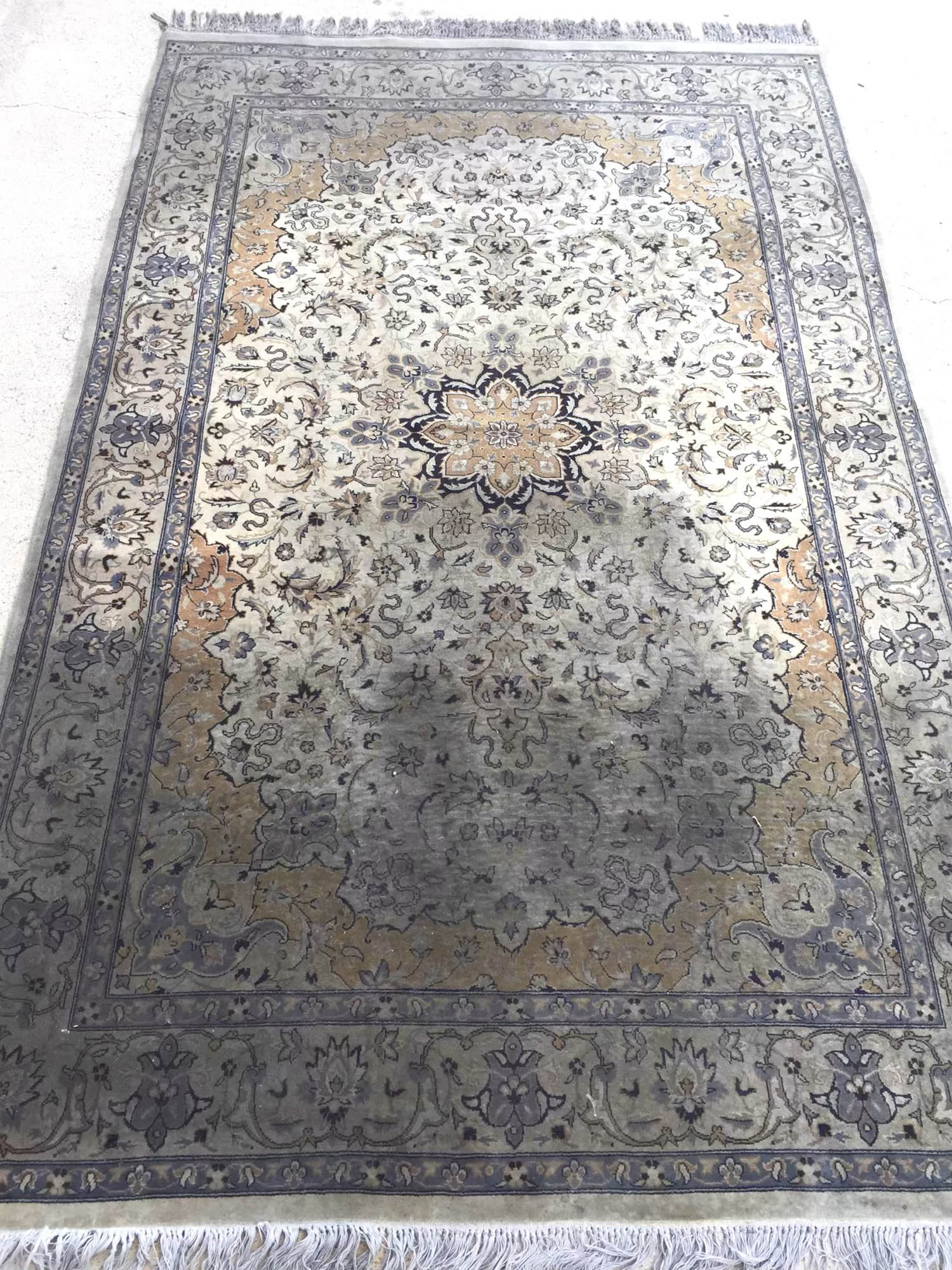
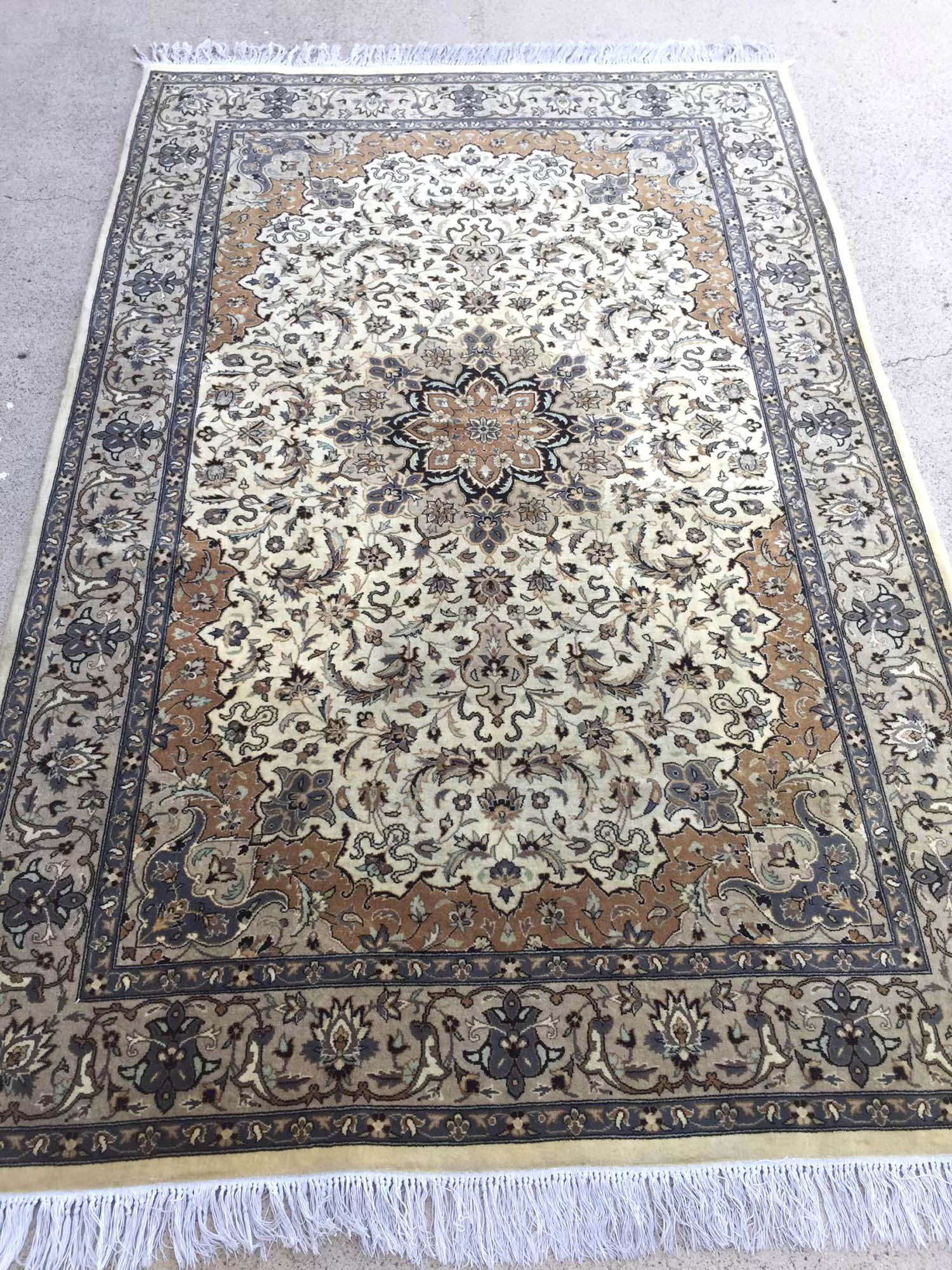
Oriental Rug Cleaning San Diego
- ✓ Free pickup and delivery across San Diego County
- ✓ Full immersion hand washing, never surface scrubbing
- ✓ Third generation family craftsmen since 1956
- ✓ Free written estimates before any work starts
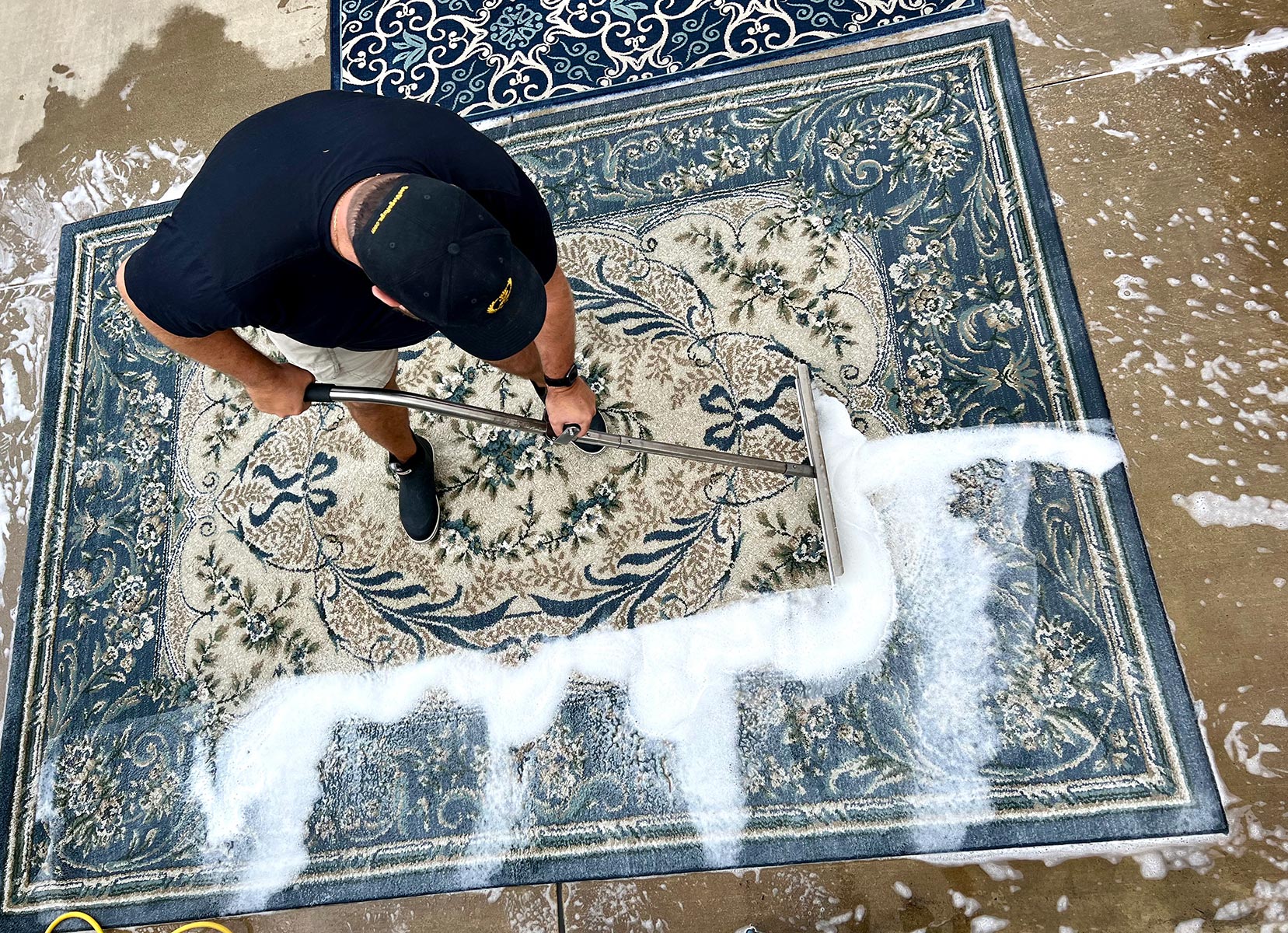
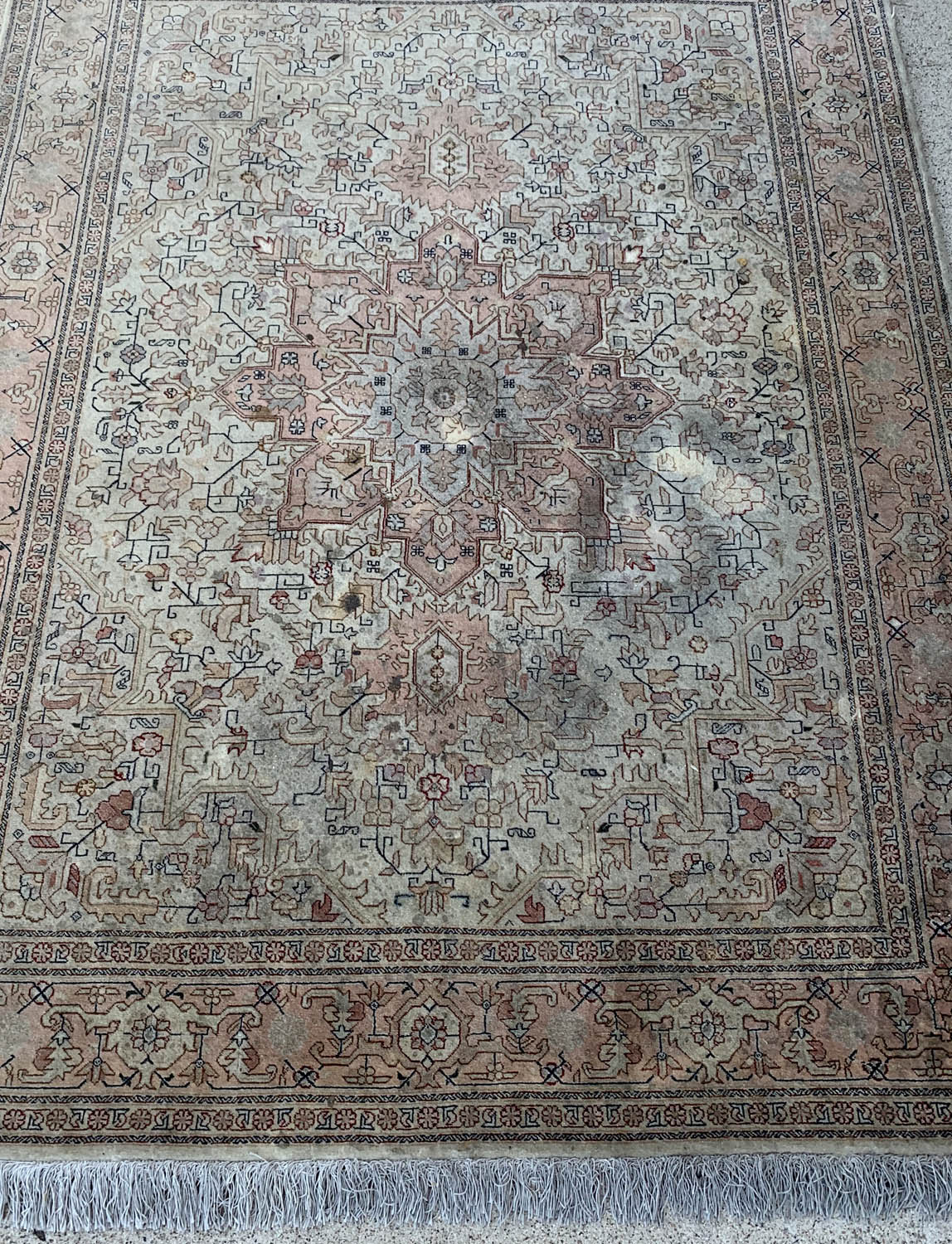
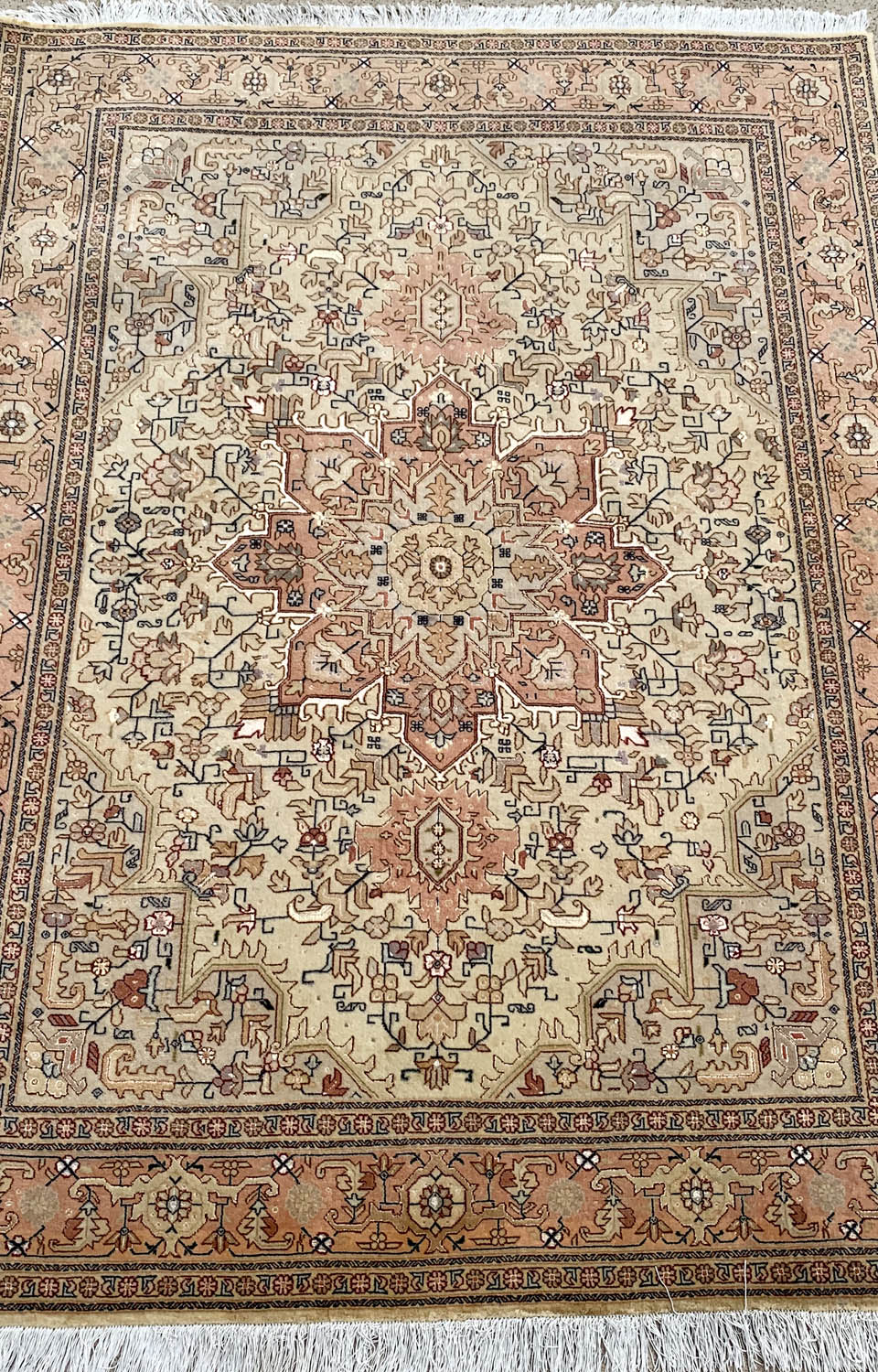
Oriental rug cleaning in San Diego should happen in a washroom, not on your living room floor. A hand-knotted rug is thousands of individual knots tied onto a woven foundation, and that foundation holds grit that no in-home carpet machine can reach. Every rug that comes to our Kearny Mesa facility is dusted, tested, and then fully immersed in water so the soil trapped between the knots is flushed all the way out. Surface cleaning brightens the top of the pile for a week. Immersion is what actually returns a hand-knotted rug to the color and hand it had when it was new.
| Full immersion wash at our facility | In-home steam cleaning | |
|---|---|---|
| Where the soil sits | Grit trapped between the knots is flushed all the way out of the foundation | Reaches the top of the pile and leaves packed soil at the foundation |
| Heat and natural fiber | Water at a safe temperature, worked from both sides of the rug | Heat can swell wool and silk fibers and move older dyes |
| Detergent | Rinsed until the water runs clear, so no soap stays near the foundation | Detergent is often left behind in a pile too dense to rinse from above |
| Fringe | Gets its own careful attention | Treated the same as the rest of the rug |
| Built for | Hand-knotted wool and silk rugs with natural dyes | Wall-to-wall carpet with synthetic fibers and factory-locked dyes |
Hot steam and truck-mounted extraction were built for wall-to-wall carpet, where fibers are synthetic and dyes are locked in at the factory. A hand-knotted oriental rug is the opposite of that. Its pile is usually wool or silk, its foundation is cotton or wool, and its color comes from dyes that sit on natural fiber. Heat and aggressive chemistry can swell those fibers, blur the dyes, and leave detergent behind in a pile too dense to rinse from above.
Immersion solves the problem the rug creates. Submerged in water at a safe temperature, the whole thickness of the rug is worked from both sides and then rinsed until the water runs clear, so no soap stays trapped near the foundation. A silk-pile rug is handled with a gentler blend and less agitation than a heavy village wool. Fringe, which is the exposed end of the foundation warps, gets its own careful attention rather than being blasted with the rest of the rug.
The word oriental covers a wide stretch of the weaving world, and each tradition ties, dyes, and finishes its rugs a little differently. A tight silk-highlight piece from an urban workshop and a chunky wool tribal rug from a mountain village both count as oriental, yet they do not wash the same way. Before any water touches a rug, we read where it likely came from, what it is made of, and how its dyes were set, then match the wash to the piece in front of us.
We clean handmade oriental rugs of nearly every origin, including: Turkish, Chinese, Caucasian, Moroccan, Kilim, Navajo, Indian, Pakistani, Afghan, Tibetan, antique and semi-antique pieces, silk and silk-highlight rugs, and machine-made oriental style rugs.
We open the rug flat and read it. Fiber content, whether the pile is wool or silk, how the knots are tied, the age of the piece, and any weak spots, moth damage, or prior color runs all get noted. Those details decide how the rug is washed, so we measure it and hand you a free estimate before anything else happens.
A hand-knotted rug can hold pounds of dry grit down at the knot line, and that grit cuts the foundation every time the rug is walked on. Before any water, we dust the rug with vibration to shake that soil loose from deep in the pile. Clearing it out is one of the simplest ways to add years to a handmade rug.
The natural dyes that give oriental rugs their depth are also the reason we never skip this step. We wet a small area and check whether any color wants to move. A rug that tests colorfast goes on to a normal wash. One with reactive reds or indigo gets a cooler, controlled method that keeps the colors where the weaver put them.
Pet urine soaks past the pile and dries into salts along the foundation, where it feeds odor and can burn the dyes over time. When a rug needs it, we soak it in a natural, non-toxic solution that breaks those salts down at a molecular level so they rinse out completely instead of hiding in the knots.
Trouble spots get treated by hand first. Once those areas are safely worked, the rug is ready for the bath. We soak both faces to loosen the dirt, odor, and grime held deep in the wool or silk pile. When the whole thickness is saturated, it is ready to wash.
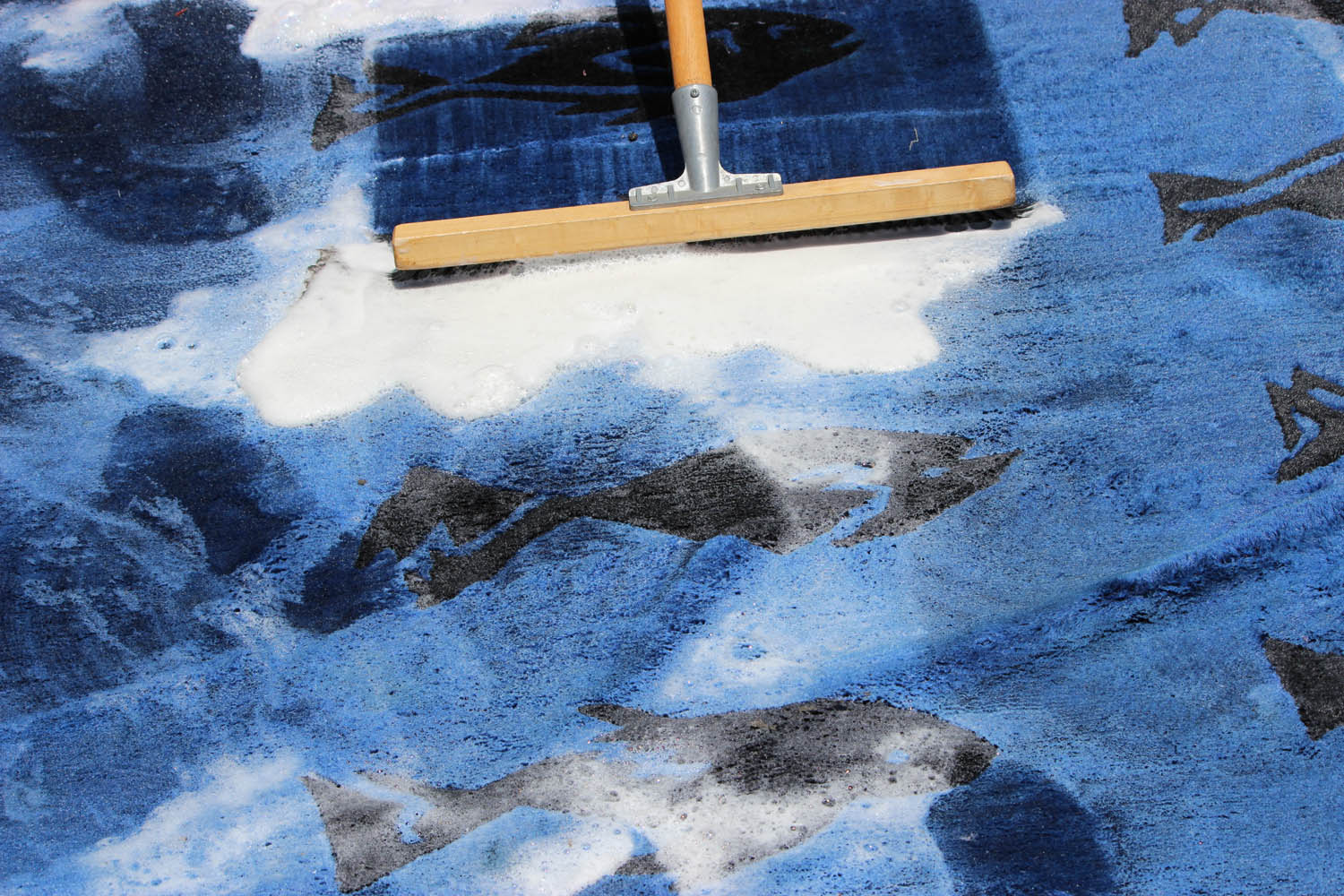
The soap blend is chosen for the fiber, a gentler mix for silk pile and a stronger one for dense wool, and all of it is all-natural with no harsh chemistry. We hand-wash the rug, working the pile down to its foundation, then flush it with a full rinse. The rinsing continues until the water leaving the rug runs clean and clear, which is how we know no soap is left behind.
Water is extracted, then the rug is dried under controlled conditions rather than rushed with high heat. Depending on the fiber and weight, it is hung on our racks or dried in the sun. A slow, even dry keeps the foundation from shrinking and the shape true.
A hand-knotted pile has a grain, the direction it was tied, and years of foot traffic push it out of line. Once the rug is fully dry, we groom the pile back into that original direction. The color evens out, the surface lies the way the weaver intended, and fringe is tidied at the same time.
We look the rug over one more time, checking that stains are gone, the pile is clean, and the colors are bright and true. Once it passes, the rug is rolled and returned to your door anywhere in San Diego County, or held for pickup if you dropped it off. Free pickup and delivery is part of the service.
An oriental rug is knotted by hand, one knot at a time, on a woven foundation, usually in wool or silk. Many area rugs are machine-made from synthetic yarn. The distinction matters for cleaning because a handmade rug carries natural fibers and natural dyes that need immersion and colorfast testing, while a machine-made rug tolerates a more routine wash. We clean both, but we do not treat them the same.
Yes. We pick up your rug anywhere in San Diego County, wash it at our Kearny Mesa facility, and deliver it back to you, all at no charge for the pickup and delivery. You never have to load a heavy rug into your car or drive it across town.
Steam and in-home extraction reach the top of the pile but leave the packed soil, and often the detergent, sitting at the foundation of a dense hand-knotted rug. Heat can also swell natural fibers and move older dyes. Full immersion flushes the rug through and rinses it clean, which is the safer path for a handmade piece.
Yes. Older and antique oriental rugs are routine for us. We have washed them by hand in San Diego since 1956, and we adjust the method to the age, fiber, and fragility of each piece rather than running every rug through the same wash.
Yes. We handle fringe, edge binding, holes, and foundation reweaving alongside cleaning. If your rug needs more than a wash, we point it out and give you an honest assessment before any work starts.
Persian Rug Cleaning · Turkish Rug Cleaning · Antique Rug Cleaning · Request a free estimate
Drop your rug off, or we pick it up free. Our shop is at 7343 Ronson Rd Ste U in Kearny Mesa, open Monday to Friday 9 to 4 and Saturday 9 to 2.