
Most rug stains can be handled at home if you get to them fast and use the right method. Some cannot, and trying anyway is how good rugs get ruined. I want to walk you through both sides.
Our family has washed rugs in San Diego since 1956, and I am the third generation doing this work. A lot of the rugs that come through our door were damaged by the cleanup, not the spill. This guide is meant to keep yours out of that group.
Before You Touch the Stain
A few rules apply to every spill, on every rug. Get these right and you have a real shot at fixing it yourself.
- Blot, never rub. Rubbing spreads the stain outward and drives it deeper into the pile. Press a clean white cloth or paper towel straight down and lift.
- Work from the outside of the stain toward the center. This keeps the spot from growing.
- Test first. Dab your cleaning solution on a hidden corner of the rug and press a white cloth on it. If any dye transfers to the cloth, stop. The dyes are not colorfast and water will make them run.
- No heat. Skip the hair dryer and the steam machine. Heat sets many stains permanently and can damage delicate fibers.
- Use small amounts of liquid. A soaked rug at home cannot be rinsed or dried properly, and trapped moisture leads to mildew and browning.
Fresh Food and Drink Spills
Speed matters more than any product here. A spill sitting on the surface is easy. A spill that has soaked into the foundation of the rug is a different job.
- Scoop up any solids with a spoon or dull knife. Do not press down.
- Blot the liquid with dry white cloths until nothing more transfers.
- Mix a few drops of clear, unscented dish soap into a cup of cool water.
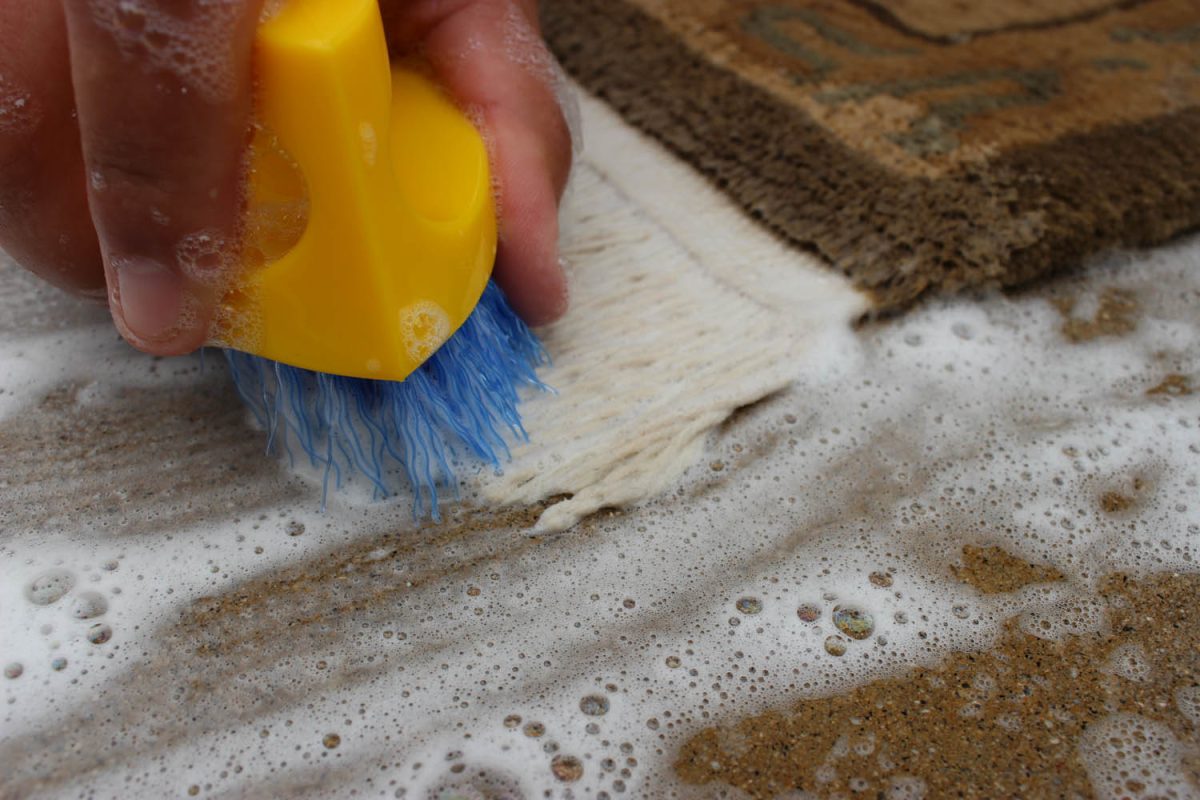
- Dampen a cloth in the solution, blot the spot, then blot again with a cloth dampened in plain water to rinse.
- Press dry towels on the area and let it air dry fully.
This handles most juice, soda, and food spills on wool and synthetic rugs when you catch them early.
Coffee, Tea, and Red Wine
These are tannin stains, and they bond with fiber as they dry. Blot up as much as you can right away with dry cloths.
Then use the same mild dish soap solution, blotting patiently. It may take many passes. Rinse by blotting with plain cool water so no soap stays behind, because soap residue attracts new dirt.
Do not reach for hydrogen peroxide or bleach products on a wool or handmade rug. They can strip the dye along with the stain, and a bleached spot is permanent.
Grease and Oil
Water alone will not move oil. Start by covering the fresh spot with cornstarch or baking soda and letting it sit for a few hours to absorb the grease. Vacuum it up gently.
Follow with the dish soap solution, since dish soap is made to cut grease. Blot, rinse, and dry as above. Old, set oil stains that have oxidized in the fiber usually need a full wash to come out.
Pet Accidents
Urine is the one I get asked about most, and it is the one where home cleaning has the hardest limit.
For a fresh accident, blot up everything you can with dry towels, standing on them to press moisture out of the pile. Then blot with a solution of one part white vinegar to two parts cool water, rinse by blotting with plain water, and dry with towels.
Here is the problem. Urine soaks through the pile and into the foundation of the rug, where it dries into urine salts. Surface cleaning cannot reach them. Every humid day, those salts pull in moisture and release odor again. That is why a spot smells fine for a week and then comes back.
Those salts have to be broken down and flushed out of the whole rug. In our shop we soak the rug in a natural, non-toxic solution that breaks the urine salts down so they rinse away without residue. There is no spray bottle version of that process. If odor keeps returning, the rug needs a real pet urine and odor removal treatment, not another round of spot cleaner.
General Odors
For mild, all-over mustiness, sprinkle baking soda across the dry rug, let it sit for several hours, and vacuum thoroughly. Fresh air helps too. Lay the rug flat outside in the shade for an afternoon, out of direct sun, which can fade dyes.
If the smell survives baking soda and fresh air, it is living in the foundation of the rug, not on the surface. Deodorizing sprays only mask it, which is why a stubborn musty rug odor needs a full immersion wash to flush the source out.
When DIY Makes It Worse
Some rugs and some stains should never meet a home remedy. This is the section I hope you read before the spill happens.
Viscose and Bamboo Silk Rugs
Viscose looks like silk but behaves nothing like it when wet. It is one of the most fragile fibers we handle, and viscose rug cleaning is a controlled-moisture job from start to finish. Water alone can make viscose brown, stiffen, or distort, and even plain water spotting can leave a permanent mark. Many custom designer rugs are made from these fibers. Blot a fresh spill dry and stop there. Everything past that belongs in a shop with controlled moisture techniques.
Antique and Handmade Rugs
Hand-knotted Persian and Oriental rugs often carry vegetable dyes that are not colorfast. You cannot tell by looking. We run a dye test on every rug before washing, because a rug that bleeds needs a completely different technique. At home, one wet cloth can pull red dye into an ivory field, and dye bleed is far harder to fix than the original stain.
Silk Rugs
Silk fibers are very fine and their dyes are often delicate. Heat, harsh chemicals, and scrubbing can permanently damage the pile and kill the luster. Blot spills dry and leave the rest to a hand wash.
Set-In Stains on Any Rug
A stain that a store-bought spot cleaner cannot fix is usually sitting in the foundation of the rug, not on the surface. More product and more scrubbing at that point push it deeper and can distort the pile. Repeated spot cleaning also leaves rings of soap residue that show up as dark halos later.
What a Full Wash Does That Spot Cleaning Cannot
Spot cleaning treats one square inch from the top. A full immersion wash treats the entire rug from the foundation up.
In our facility, the rug is dusted with vibration to shake out dry soil buried in the pile, dye tested, pre-treated by hand on the trouble spots, then fully immersed and washed with fiber-safe soaps matched to its material and dyes. It is rinsed until the water runs clear, spun in a centrifuge that pulls most of the moisture from the foundation, and dried in a controlled room so it dries evenly without mildew, browning, or dye migration.
That is how a stain and its odor leave a rug for good instead of resurfacing in a month.
Know When to Stop
Try the home methods above on fresh spills, sturdy fibers, and colorfast rugs. Stop the moment a stain resists a second gentle attempt, the moment dye shows on your cloth, or any time the rug is viscose, silk, antique, or a piece you love.
At that point, the cheapest move is the professional one, because you are no longer paying to remove a stain. You are paying to undo a cleanup.
Zeytounian Rug Cleaning & Repair has washed San Diego’s rugs for three generations. If your rug needs more than a blot and a prayer, our full immersion rug cleaning and washing handles set-in stains and odors, and our rug repair and restoration service can fix the fringe, edges, and worn spots while it is in the shop. Bring us the rug before the stain wins.
Common Questions About Rug Stains and Odors
Can I get an old, set-in stain out of a rug at home?
Usually not. A stain that has already resisted a store spot cleaner is sitting in the foundation of the rug, not on the surface, and more scrubbing pushes it deeper and can distort the pile. At that point a full immersion wash is the fix, because it treats the rug from the foundation up rather than from the top.
Does baking soda actually remove rug odor?
Baking soda helps with mild, surface mustiness if you let it sit for several hours and vacuum thoroughly. It does nothing for odor that has soaked into the foundation, which is most pet and moisture odor. If the smell survives baking soda and fresh air, the source is deeper than the surface and needs a wash.
Is white vinegar safe to use on a wool rug?
Diluted white vinegar, one part vinegar to two parts cool water, can help a fresh pet spot on a colorfast wool rug after you test a hidden corner for dye transfer. Keep it off viscose, silk, and antique hand-knotted rugs entirely, and never use it hot. If any dye shows on your test cloth, stop and call a professional.
Why does my rug smell again a week after I cleaned it?
Because the odor is coming from urine salts dried into the foundation of the rug, where surface cleaning cannot reach. Every humid San Diego day those salts pull in moisture and release the smell again. They have to be broken down and flushed out of the whole rug, which is what our pet urine and odor treatment does.
When should I stop cleaning a rug myself and call a professional?
Stop the moment a stain resists a second gentle attempt, the moment dye shows on your blotting cloth, or any time the rug is viscose, silk, antique, or a piece you would be upset to lose. Past that point you are no longer paying to remove a stain, you are paying to undo a cleanup, and that costs more.
