

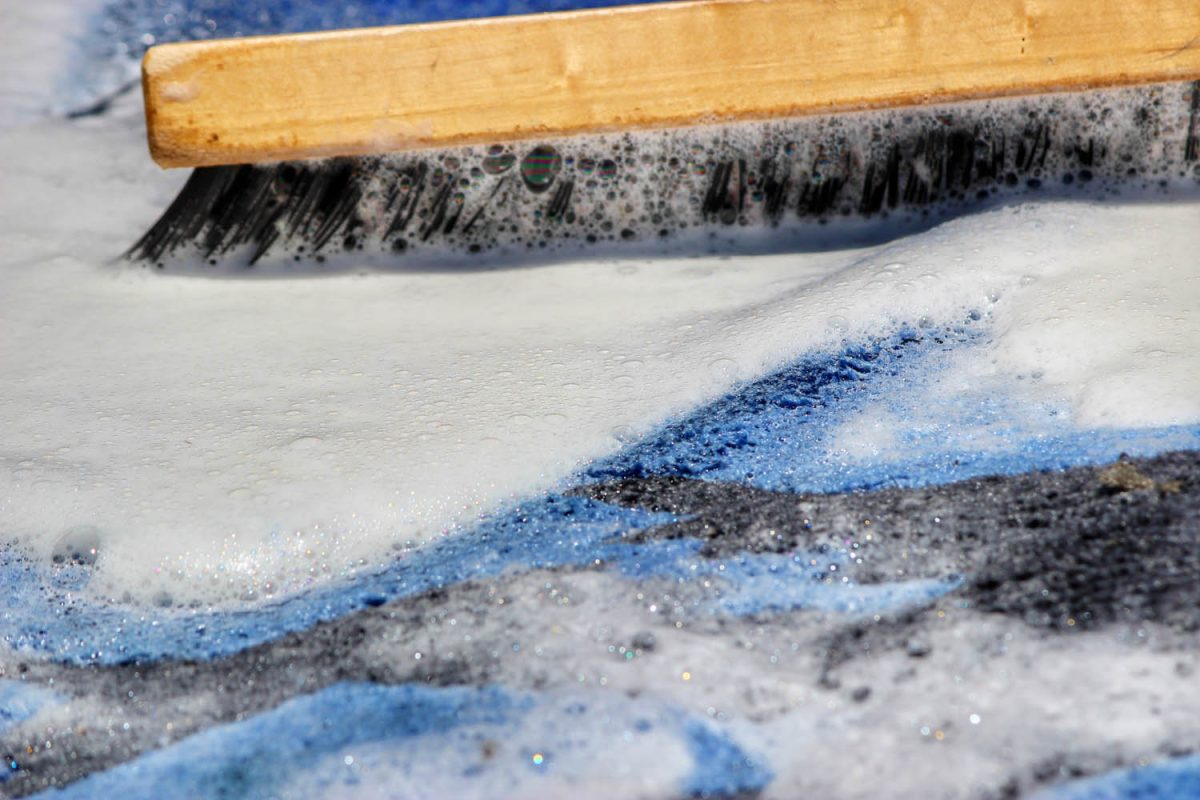
You can keep a Persian rug clean at home with gentle, regular care, but a real wash is not a home job. A hand-knotted Persian rug should never go in a washing machine, under a steam cleaner, or into a soaking tub. The safe deep clean is a controlled immersion wash done by hand.
A Persian rug rewards a little care and punishes a rushed cleanup. I am the third generation of my family washing rugs in San Diego, and most of the ruined Persian rugs that reach our floor were not wrecked by the spill or the daily dirt. They were wrecked by a well meant wash at home. Here is the honest version: what you can safely do yourself, what you should never try, and where the line sits.
What You Can Safely Do at Home
Between professional washes, a few simple habits keep a Persian rug healthy and stretch the time between cleanings.
- Vacuum gently, suction only. Turn the beater bar off or use a suction attachment. A spinning brush pulls at hand-knotted pile and chews the fringe. Once in a while, flip the rug and vacuum the back to shake loose the grit that has worked its way down.
- Shake or beat it outside. A smaller rug taken out and beaten over a railing gives up a surprising amount of dry soil that a vacuum never reaches. Do it before that soil turns into ground-in grit.
- Rotate it twice a year. Sun and foot traffic wear a rug unevenly. Turning it end for end spreads that wear and keeps one edge from fading or thinning ahead of the rest.
- Blot spills the moment they happen. Press a clean white cloth straight down, work from the outside in, and use only a little cool water. Our guide to removing stains and odors at home covers the method spill by spill.
- Keep a pad underneath. A good pad takes the daily wear before it reaches the pile and stops the rug sliding, which saves the foundation over the years.
What Never to Do to a Persian Rug
This is the section I hope you read before the rug looks dirty, because these are the moves that turn a cleaning into a repair.
Never use a washing machine
The agitation twists the foundation and can felt the wool into a stiff, wavy mess that never lies flat again. Fringe tears, edges unravel, and a fine rug comes out smaller and misshapen. No home machine is built for a hand-knotted rug.
Skip the steam cleaner
Steam and hot water set many natural dyes and drive moisture deep into the foundation, where a home machine cannot pull it back out. Trapped damp then browns the rug and breeds a musty smell. Steam cleaning is made for wall-to-wall carpet, not for a knotted rug that has to dry evenly from the inside.
Do not soak it
Filling a tub and letting a Persian rug sit is how dyes bleed and foundations rot. A wet rug that cannot be rinsed clean and dried under control will brown, mildew, and run its reds into its ivory. Water is only safe on these rugs when the drying is controlled, and that is the part a home cannot manage.
Keep the harsh chemicals away
Bleach, oxygen boosters, and strong spot cleaners strip the dye along with the stain, and a bleached patch is permanent. Vegetable and other natural dyes are not colorfast, and you cannot tell by looking, which is why every rug we wash is dye tested first.
No hard scrubbing or direct sun
Scrubbing distorts the pile and frays the knots. Drying a rug in full San Diego sun fades the very colors you are trying to protect. Gentle and shaded wins every time with a rug like this.
Why a Persian Rug Needs a Professional Wash
A real clean reaches the bottom of the pile, where years of dust settle into the foundation and grind at the fibers with every step. That is exactly the soil a surface clean leaves behind.
In our shop the rug is first dusted with vibration to shake dry soil out of the back of the pile. Then it is dye tested, pre-treated by hand on the trouble spots, and fully immersed and washed with fiber-safe soaps matched to its wool, silk, and dyes. It is rinsed until the water runs clear, most of the moisture is pulled out in a centrifuge, and it dries in a controlled room so it dries evenly, with no browning, mildew, or dye migration. That controlled process is what our full immersion rug cleaning and washing is built around, and it is the same care every Persian rug we clean in San Diego receives.
Silk and Antique Persian Rugs Leave No Room for Error
Not every Persian rug is sturdy wool. Some are silk, some are old, and both raise the stakes on every point above.
Silk pile is very fine and its dyes are often delicate, so heat, scrubbing, and harsh cleaners can flatten the sheen and blur the colors for good. A silk Persian rug is a blot-and-stop rug at home, and the rest belongs to a hand wash built for the fiber, which is what our silk rug cleaning is set up to do. Antique rugs add age to the problem: brittle foundations, worn areas, and older vegetable dyes that were never colorfast. A wash that a newer wool rug shrugs off can be the thing that finishes a fragile antique, so those pieces are read carefully and washed slowly through our antique rug cleaning. If you are not certain what your rug is made of, our note on telling wool, silk, and viscose apart gives you three quick checks before you touch it with anything.
How Often Should a Persian Rug Be Washed
For most homes, a professional wash every three to five years keeps a Persian rug healthy, sooner if you have pets, young kids, or heavy traffic on it. In between, the home care above is enough. If you are not sure where your rug stands, our note on how often to clean an oriental rug walks through the signs, and we will always give you an honest read, free, before any work.
Zeytounian Rug Cleaning & Repair has washed San Diego Persian and oriental rugs for three generations. Care for your rug gently at home, and when it is time for a real wash, bring it to people who do it by hand. Every estimate is free.
Cleaning frequency is its own question. Our guide on how often to have an Oriental rug professionally cleaned breaks it down by how the rug is used.
Common Questions About Washing a Persian Rug
Can I wash a Persian rug at home?
Not a full wash. You can safely vacuum it with the beater bar off, shake it out, rotate it, and blot fresh spills with cool water. A deep clean means immersion washing and controlled drying, which a home cannot do without risking dye bleed, shrinkage, and mildew, so that step belongs in a professional shop.
Is steam cleaning safe for a Persian rug?
No. Steam and hot water can set the dyes and push moisture into the foundation where a home machine cannot pull it back out, which leads to browning and a musty smell. Steam cleaning is made for wall-to-wall carpet, not for a hand-knotted rug that has to dry evenly from the inside.
Will a Persian rug shrink if it gets wet?
It can, if it is soaked and dried without control. Uneven wetting and drying twists the foundation and can felt the wool, leaving the rug smaller and wavy. A controlled immersion wash keeps the rug flat and true, which is why the drying stage matters as much as the washing.
How do I get a smell out of a Persian rug?
Air it out flat in the shade and vacuum both sides first. If the smell lives in the foundation, usually from pet urine or trapped damp, no home spray reaches it, and the rug needs a full wash that flushes the source out. Our pet odor and full immersion washing pages explain how we handle it.
How often should a Persian rug be professionally cleaned?
Every three to five years for most homes, and sooner with pets, children, or heavy foot traffic. Gentle vacuuming and quick spill cleanup keep it healthy in between. If the pile feels gritty or the colors look flat, it is ready sooner, and we will tell you honestly at a free evaluation.
