When your dog or cat has an accident on a wool rug, the clock starts immediately, and reaching for standard carpet cleaning can do more damage than the stain itself. At Zeytounian Rug Cleaning & Repair, we specialize in safely removing pet stains and odors, including dog and cat urine, from delicate wool and Oriental rugs across San Diego.
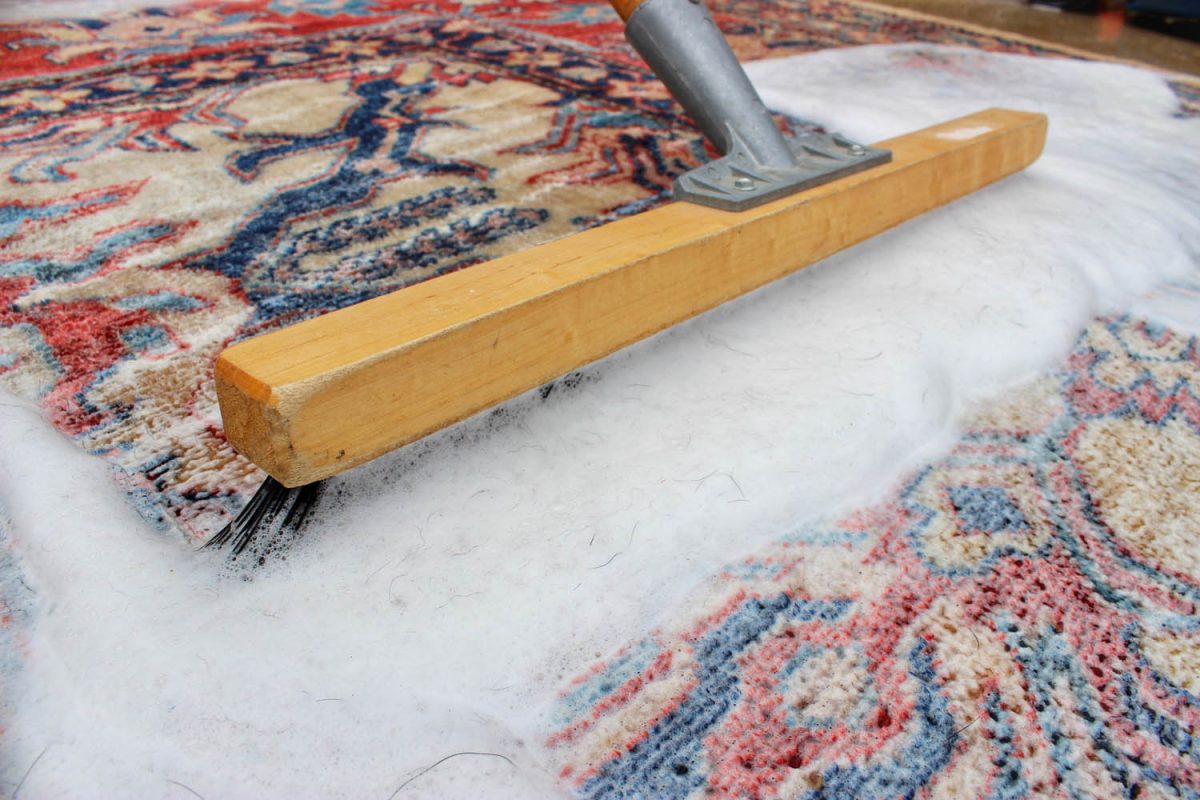
We use wool-safe, specialized methods that protect the natural fibers and dyes that generic carpet cleaners so often ruin. Whether the accident happened this morning or set in months ago, our goal is the same: save the rug you love, without trading one problem for another. Zeytounian has hand-washed San Diego rugs since 1956, and today the third generation runs the shop. Every wool rug we take in goes through the same nine-step full-immersion wash with all-natural soaps and no harsh chemicals.
Why Wool Rugs Need a Specialist for Pet Stains
Wool is a natural, highly absorbent fiber, which is exactly why pet accidents are so tough on it. Urine doesn’t just sit on the surface; it wicks down through the pile and into the foundation of the rug, where a household carpet machine can’t reach. The wrong cleaning approach can lock the stain in permanently, spread it wider, or destroy the rug outright.
- Harsh chemicals in general carpet cleaners strip wool’s natural oils and weaken the fibers, leaving the rug brittle and dull.
- Aggressive scrubbing or high-heat extraction can cause dyes to migrate and bleed, creating permanent discoloration around the original stain.
- Pet urine leaves behind salts and crystals that reactivate every time humidity rises. Masking the smell with a spray isn’t enough. The source has to come out of the fiber.
A generalist treats the symptom on the surface. Getting a pet accident fully out of wool means treating the whole rug, down to the knots where the urine settles.
What Actually Happens When Pet Urine Soaks Into Wool
Understanding why pet stains are so stubborn makes it clear why a specialized process matters. Fresh urine is slightly acidic, but as it dries it turns alkaline and leaves behind concentrated uric acid crystals bonded deep in the fibers. Those crystals are what create that sharp, lingering odor, and they’re notoriously difficult to dissolve. Water alone won’t touch them, and most consumer products only rinse away the parts you can smell today while leaving the bonded crystals behind.
That’s why a rug can smell “clean” for a week and then reek again after a humid night or a bit of steam from the shower. The moisture reactivates the crystals. On top of the odor problem, urine draws dye out of the surrounding wool and can spread as it dries, so a small accident becomes a large discolored ring. Effective treatment has to neutralize the alkaline salts, break down the crystals, and flush them completely out of the rug, not just deodorize the top layer.
Dog Urine vs. Cat Urine: Why Some Accidents Are Harder to Treat
Not all pet accidents behave the same way. Dog urine tends to come in larger volumes, so it saturates a wider area and reaches the foundation quickly. With dogs the damage is usually about spread and dye migration. Cat urine is more concentrated and more heavily loaded with the proteins and crystals that cause deep, persistent odor, which is why cat accidents are frequently the harder of the two to fully resolve.
Older, repeated accidents in the same spot are the most challenging of all, because layers of crystals build up over time and the surrounding fibers may already be weakened. None of this means a rug is beyond saving. It just means the treatment has to match the situation in front of us. We inspect every rug individually, identify what we’re dealing with, and set realistic expectations before we begin.
Our Wool-Safe Pet Stain & Odor Removal Process
Every rug starts with a hands-on inspection so we can tailor the treatment to your specific piece rather than running it through a one-size-fits-all machine.
- Inspection & dye testing. We examine the rug to identify the stain type, the extent of the damage, and the fiber content, then test the dyes for stability. This tells us how the rug will respond to cleaning and lets us protect the colors before any solution touches the wool.
- Neutralize & flush. Instead of scrubbing the surface, we neutralize the alkaline salts and flush the urine crystals and odor-causing bacteria out of the rug entirely. This flush is the heart of our nine-step immersion wash, and it is what actually removes the smell at its source rather than covering it.
- Wool-safe solutions. We use cleaning agents formulated specifically for natural wool. That means a genuinely deep clean with no bleaching, no fiber damage, and no color loss, the balance that off-the-shelf products can’t strike.
- Controlled drying. Wool that dries too fast, too hot, or unevenly can shrink, ripple, or lose its texture. We dry every rug in a controlled environment so it comes back with its original hand and shape intact.
At the end of the process we inspect the rug again to confirm the stain and odor are resolved before it goes back to you.
The Risks of DIY Pet Stain Removal on Wool
We understand the instinct, when an accident happens, you grab whatever’s under the sink. But off-the-shelf spot treatments are one of the most common reasons a rug ends up beyond repair. Many contain oxidizers or high-pH detergents that set the stain permanently, bleach the fibers around it, or trigger the exact dye bleeding you were trying to avoid. Even “pet-safe” carpet sprays are formulated for synthetic wall-to-wall carpet, not for hand-knotted wool.
Rented steam cleaners are another frequent culprit: the heat and heavy moisture drive the stain deeper and can shrink the foundation. By the time a rug reaches us after several rounds of DIY treatment, we’re often undoing that damage before we can even address the original accident. The safest move after an accident is to contain it and call a specialist, not to experiment on a rug that may be irreplaceable.
What to Do the Moment an Accident Happens
There are a few safe steps you can take right away to limit the damage before we arrive:
- Blot, don’t rub. Press a clean white cloth or paper towel firmly onto the spot to lift as much liquid as possible. Rubbing pushes urine deeper and frays the fibers.
- Work from the outside in so you don’t spread the stain outward into clean wool.
- Skip the store-bought sprays and vinegar mixes. They can react with wool dyes and set the stain. Plain cold-water blotting is safer until the rug can be professionally treated.
- Lift the rug off the floor if possible, so moisture doesn’t transfer to the pad or hardwood underneath.
- Call us as soon as you can. The sooner a fresh accident is treated, the higher the chance of a complete removal with no lasting mark.
Why San Diego Pet Owners Trust Zeytounian
We’re rug specialists, not a general carpet-cleaning outfit that happens to take rugs on the side. Every piece is assessed and treated individually, by people who understand how wool, silk, and natural dyes behave. We’re upfront about what’s achievable on a given stain, we treat valuable and heirloom rugs with the care they deserve, and we focus on removing odor at the source so the problem doesn’t come back. For pet owners across San Diego who don’t want to gamble with a rug they love, that specialized approach is the difference. It shows up in our reviews, a 5.0 rating from more than 400 local customers.
Ready to rescue a rug you love? Explore our full range of rug cleaning services, ask about rug pickup and delivery across San Diego, or contact us for a free estimate.
Frequently Asked Questions
Yes. Our specialized immersion washing process flushes the entire rug, removing the urine crystals and odor-causing bacteria that spot cleaning always leaves behind. Because we treat the source rather than masking it, the smell doesn’t return the next time humidity rises.
Older stains are more challenging, but our technicians have a high success rate significantly reducing or fully removing set-in pet stains from wool rugs. We assess each stain individually and tell you honestly what to expect before we start.
We treat Oriental rugs with the same care as fine wool, using a gentle, pH-balanced process. We always test for colorfastness before proceeding so the delicate dyes and intricate weaves stay protected.
No. Damage and shrinkage come from the wrong methods, high heat, harsh chemicals, and uncontrolled drying. Our wool-safe solutions and controlled drying are designed specifically to protect natural fibers, texture, and color.
Usually, yes. A returning odor almost always means the uric crystals are still bonded in the fibers below the surface. Our flushing process targets exactly those deep deposits that home cleaning can’t reach.
Sometimes. If urine soaked through to the pad or subfloor, that can be a second odor source. We’ll let you know if we see signs of transfer so you can address it and keep the freshly cleaned rug from reabsorbing the smell.
Why Time Matters More on Wool Than on Anything Else
Every article about pet accidents says to act fast. On a wool rug it is worth understanding exactly why, because the reason is specific to the fiber and it changes what you should do.
Wool is a protein, and protein fibers are sensitive to alkalinity in a way that synthetic carpet simply is not. Fresh urine is close to neutral. As it sits and breaks down it becomes progressively more alkaline, and it is in that alkaline state that it does its real work on the rug: loosening dyes from the fiber, and weakening the cotton foundation the wool is knotted to. The clock everyone talks about is not really about the smell. It is about the pH shifting while the accident sits in contact with the dyes.
This is also why so many household products make things worse rather than better. Most general purpose cleaners and many carpet products are themselves alkaline, so applying one to a wool rug adds to the exact problem you are trying to reverse. Oxygen bleaches and anything containing peroxide can strip colour out of wool outright, and on a hand knotted rug that is permanent. Hot water is the third trap, because heat plus moisture plus rubbing is the combination that felts and shrinks a wool pile.
What genuinely helps in the first minutes is unglamorous: absorb as much liquid as possible by pressing a thick white towel down into the pile without rubbing, keep going with dry towels until they stop coming up wet, and stop there. Getting the volume out reduces how much residue is left to become alkaline later, and it does it without introducing any chemistry at all.
After that the honest position is that a rug which has been urinated on needs to be washed through, not treated on the surface. An older accident is not a lost cause and we handle set-in cases regularly, but the work is greater and the possibility of dye movement is higher, which is the whole argument for not waiting.
One last point that catches people out: the floor and the pad underneath matter too. Urine passes straight through a rug, so a perfectly clean rug returned to a contaminated pad or an untreated hard floor will start to smell again within days, and the rug gets blamed for it.
One question worth settling early is whether the accident is still active. A rug that keeps being used by the same animal will keep coming back, and washing it repeatedly is an expensive way to manage a behaviour problem. If the spots are appearing in the same place, deal with the cause and the floor underneath at the same time as the rug, otherwise the fresh smell returns within days and the wash gets blamed for it.
